The first 30 minutes of a resident's move-in: where families decide if they trust you
Families form 80% of their opinion about a skilled nursing facility in the first 30 minutes after move-in. Most operators leave that window to chance. Here's how we design it on purpose (welcome cards, bath sets, dining menus, gift bags) and why every detail compounds.
A skilled nursing facility isn’t a hotel.
But the moment a resident moves in, the room is theirs. The bed is theirs. The closet is theirs. The view out the window is theirs. And in the next 30 minutes (between the family’s arrival, the unpacking, the first conversation with a nurse, the first meal), families form roughly 80% of their lasting opinion about whether they trust the facility with someone they love.
Most operators leave that window to chance.
The room is clean. The bed is made. The TV works. That’s the baseline, and the baseline is invisible. What separates facilities that retain residents and earn family loyalty from facilities that don’t is what happens in the details, the things that don’t have to be there but are.
This is how we design that window. The thinking behind every piece, why each one matters more than its budget line suggests, and what we did for Village Place across the hospitality system.
Why the first 30 minutes carry so much weight
A family moving a parent into skilled nursing is operating under the worst possible cognitive conditions. They’re scared, exhausted, often grieving, and almost always second-guessing the decision. They walk into the facility primed to look for evidence that confirms their fears. Anything that feels institutional, indifferent, or rushed will register as a red flag, and they’ll spend the next month looking for more red flags.
The opposite is also true. Anything that feels considered, warm, and human registers as evidence that the facility is the kind of place that pays attention. They’ll spend the next month noticing more of those signals.
The first 30 minutes set the lens through which families perceive everything else. A welcome card on the bed when they walk in shifts the whole frame from “is my mom safe here” to “people thought about her arrival before she got here.”
That shift is worth more than any marketing campaign you’ll run.
The pieces that do the work
Across multiple skilled nursing rebrands, we’ve refined a hospitality system that hits the moments that matter. Each piece has a specific job:
The welcome card
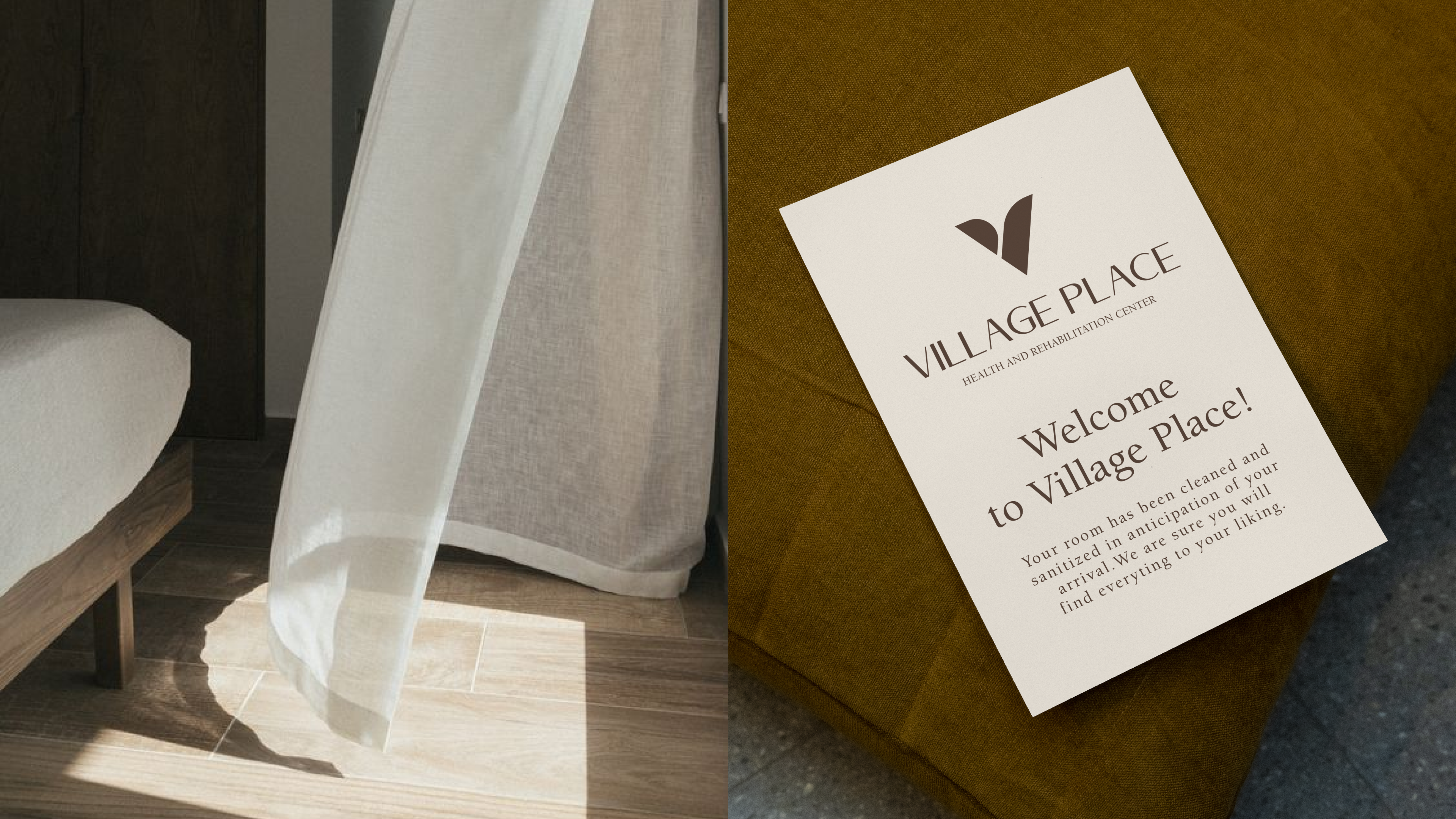
A printed card on the bed when the resident walks in for the first time. Not a generic “welcome to our community” greeting. Specific text that addresses the moment: the room has been cleaned and sanitized in anticipation of their arrival, the staff is ready to make any adjustments needed, the resident’s name is handwritten somewhere on it.
The card costs roughly $0.40 per move-in to produce. The signal it sends is enormous. Families read it. They show it to siblings. Sometimes they keep it.
The bath set
A branded bath mat, a pair of slippers, and a waffle towel set, arranged in the bathroom before the resident arrives. This is the piece operators most often skip because it feels like a hotel touch, not a healthcare touch. It’s the touch that does the most work.
A resident moving from a hospital bed into skilled nursing has had every part of their dignity stripped over the previous two weeks. A clean bath set with their name on a hangtag, waiting for them, is one of the first signals that this is a place where they get treated like a person again.
The dining menu
Most skilled nursing facilities print their menu on copy paper and clip it to a clipboard. The Village Place menu was designed as a piece, printed on quality stock, branded, photographed alongside the actual food. It’s a small thing, but the menu is one of the most-read pieces of communication in the facility. It’s looked at three times a day, every day.
The menu signals what the facility thinks of itself. A photocopied menu on a clipboard says “we don’t think about this.” A designed menu says “we think about everything.”
The bath amenities
Branded shampoo and soap in the bathroom. A two-color label, a quality bottle, the wordmark visible. Residents who can read the label will read it. Family members will photograph it. The amenities show up in dozens of family photos shared on Facebook and in WhatsApp threads, doing free brand work months after the resident moves in.
The gift bag
For Village Place we designed a navy gift bag with the wordmark, given to families on move-in day, containing branded stationery, the welcome card, a printed welcome letter from the administrator, and a few small comforts (a notepad, a pen, a folder for paperwork). The bag is purely emotional. It serves no clinical function. It’s the piece that makes the day feel ceremonial rather than transactional.
Families keep these bags. They show up in family photos a year later.
Staff identity badges
This is the piece operators consistently underrate. A resident or family member who walks through the facility on day one needs to know who everyone is. Lanyards in two brand colors, badges that put the staff member’s name and role at eye level, photos that match the actual staff member.
A facility where every staff member is immediately identifiable feels like an operation that takes itself seriously. A facility where staff badges are inconsistent, dirty, or missing feels chaotic. Families notice. State surveyors notice.
The math that justifies the budget
A complete hospitality system (welcome cards, bath sets, menu, amenities, gift bags, badges) costs roughly $40-60 per resident move-in across the print and product pieces, amortized over the photography and design work that gets done once.
A single resident moving in for a 90-day rehab stay generates somewhere between $25,000 and $45,000 in revenue depending on payer mix.
The hospitality system pays for itself if it influences a single move-in decision per quarter. In practice, it influences more, because the families don’t only make their own decision. They recommend to siblings, friends, and neighbors who are facing the same choice 18 months later.
Hospitality investment in skilled nursing is one of the highest-ROI marketing categories that exists. It’s also one of the most consistently underfunded.
What we did for Village Place
For Village Place, we designed the full hospitality system in parallel with the brand identity, so every piece launched together when the facility reopened.
You can see the photography of the system on the case study: the welcome card on the mustard cushion, the bath set with mat and slippers and waffle towel, the dining menu shot from above with a baguette and orange slices, the navy gift bag and envelope set. Every piece was designed against the same brand standards as the signage and website, so the resident’s experience inside the room matched the facility’s posture in the market.
The result was that move-in day, for every new admission during the four-month census ramp, was a designed experience rather than a transactional one. That alone shifted the kind of word-of-mouth Village Place generated in its first year back.
How to build a hospitality system if you don’t have one
A few principles that have held up across every operator we’ve worked with:
- Design the pieces against your brand standards, not separately. The welcome card and the dining menu and the bath amenity labels should all read as part of one operation.
- Photograph the system as a library. The hospitality pieces are some of the most beautiful brand assets you’ll ever own. Shoot them properly so you can use the photography in marketing for years.
- Train the admissions team to deploy the pieces consistently. A welcome card that doesn’t get placed on the bed is worse than no welcome card. Build the deployment into the move-in checklist.
- Refresh every 18-24 months. Hospitality items get worn. Menus get outdated. Bath sets get used. Plan the refresh into the budget.
- Don’t skip the badges. The single highest-leverage piece for the lowest cost is consistent staff identification.
A skilled nursing facility that has thought about the first 30 minutes of move-in tells you everything about how they think about the next 30 days.
If you want to build a hospitality system into a current rebrand, a relaunch, or a new facility opening, we should talk. It’s the kind of work that shows up in every family conversation about your facility for years.
Frequently asked questions
- What goes into a skilled nursing welcome experience?
- A complete hospitality system for a resident move-in includes: a welcome card placed on the bed before arrival, a branded bath set (mat, slippers, waffle towel), a designed dining menu, branded bath amenities (shampoo, soap), a gift bag with stationery for the family, and consistent staff identity badges with name and role at eye level. Each piece signals operational seriousness.
- How much does a hospitality system cost per resident move-in?
- A complete hospitality system runs roughly $40-60 per move-in across the print and product pieces, amortized over the photography and design work that gets done once. A single 90-day rehab stay generates $25,000-$45,000 in revenue, so the system pays for itself if it influences a single move-in decision per quarter.
- Why do families notice the welcome card?
- The first 30 minutes of move-in is when families form 80% of their lasting opinion about the facility. Anything that feels considered, warm, and human registers as evidence the facility pays attention. A welcome card with handwritten elements addresses the moment families are most anxious. It shifts the lens from 'is my mom safe here' to 'people thought about her arrival before she got here.'
- What's the most underrated piece of hospitality design in skilled nursing?
- Staff identity badges. A facility where every staff member is immediately identifiable by name and role feels like an operation that takes itself seriously. A facility where badges are inconsistent, dirty, or missing feels chaotic. Families notice. State surveyors notice. It's the cheapest piece in the system and one of the highest-leverage.
The first 48 hours decide everything.
A family spends months choosing you, then judges the whole decision on move-in day. Design those first 48 hours and you turn anxiety into relief, and a new resident into an advocate.