35 facility websites, one design system: the Lionstone rollout
How we launched 35 healthcare facility websites across two states on a single design system, plus the motion, print, and digital assets around them, all on one calendar. What multi-site web architecture actually takes for a skilled nursing network.
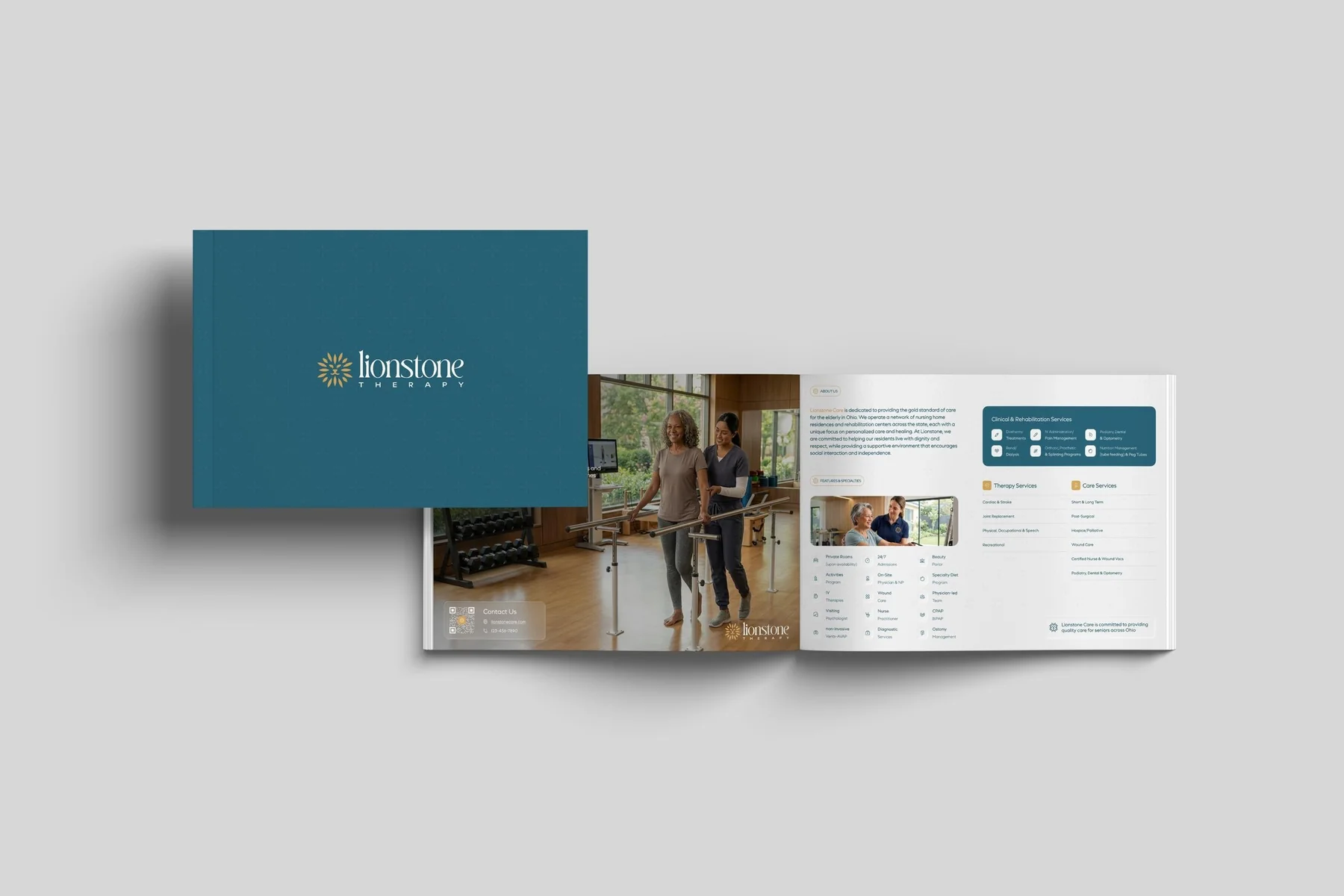
Building one healthcare website well is a project. Building 35 that all read as the same operator, across two states, launched on one calendar, is a system. Lionstone was the system.
The problem multi-facility operators hit
A network grows one facility at a time, and the web presence grows the same way. Facility 1 gets a site. Facility 7 gets a different site from a different vendor. By facility 20, a family clicking between two locations in the same network has no way to tell they belong to the same company. Discharge planners have the same problem, and they’re the ones sending referrals.
That fragmentation costs real referrals and real census, because trust doesn’t transfer between pages that look unrelated.
One design system, 35 facility pages
The fix was a single design system with facility-level templates. One visual language, one set of shared components, one source of truth for the brand. Each facility gets its own page carrying its own photography, its own services, and its own local detail, all built on the same structure.
So the network reads as one operator everywhere, and it can add a facility or update one without rebuilding anything. The 35th site costs a fraction of the first, because the system already exists.
We’ve written about the underlying approach in multi-facility website architecture. Lionstone is that approach at full scale, across Lionstone Healthcare and Lionstone Therapy.
Launched on one calendar
The whole network went live coordinated, not facility by facility over months. That matters for two reasons.
Families and referral sources see one consistent operator everywhere at once, instead of a patchwork that shifts as sites trickle out. And a single launch calendar forces the design system to be genuinely reusable, because it has to hold for all 35 facilities, not just the flagship.
Motion, print, and digital around the web
A web rollout that stops at the websites leaves the brand inconsistent the second someone leaves the site. So the Lionstone work included the motion, print, and digital assets built to match, keeping the brand consistent across every channel the network touches.
See it
The Lionstone project page is here, and the live network sits at lionstonecare.com.
This kind of multi-site build runs through our multi-location branding and web and digital practices. If you run a healthcare network that’s grown past what its web presence can hold, we should talk.
Frequently asked questions
- How do you build 35 facility websites without them looking like 35 different companies?
- You build one design system with facility-level templates, not 35 separate sites. Shared components, one visual language, and a single source of truth for the brand, with each facility's page carrying its own photos, services, and local detail. That way a family or a discharge planner moving between two facility pages sees the same operator, and the network can add or update a facility without rebuilding anything.
- Why launch all the sites on one calendar instead of one at a time?
- A coordinated launch means the whole network goes live consistent, and referral sources and families see one operator everywhere at once instead of a patchwork that changes facility by facility over months. It also forces the design system to be genuinely reusable, because it has to work for all 35 facilities, not just the first one.
- What surrounds the websites in a rollout like this?
- The Lionstone rollout included motion and print and digital assets built to match the web system, so the brand held across every channel, not just the sites. A web rollout that ignores the collateral, social, and referral materials leaves the brand inconsistent the moment someone leaves the website.