How brand work converts hospital referrals (without buying ad space)
Discharge planners decide where patients go in about a minute, with a stack of folders on the desk. Here's what makes one folder different, and how brand work translates into census.
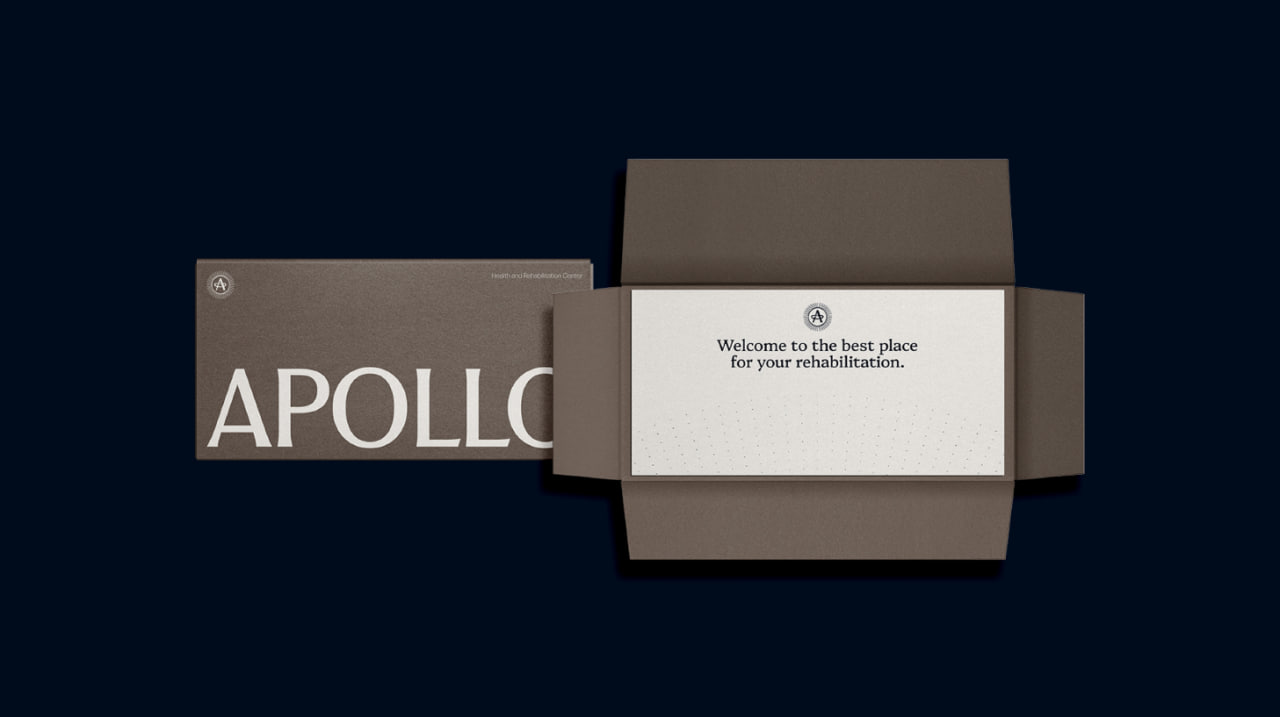
A discharge planner has six minutes between patient handoffs. They’re sitting at a desk with a stack of glossy folders from every skilled nursing and rehab facility competing for the bed. They have to make the call.
What decides it?
The relationship with the community liaison matters. The clinical fit matters. The bed availability matters.
But when those are roughly equal, what tips the decision is the planner’s gut feeling about which facility won’t embarrass them. Patients call discharge planners weeks after a transfer to complain. Families post Google reviews. Hospital case managers track which facilities the planner sent their patients to. The planner’s reputation rides on every recommendation.
So they default to the facility that looks like it won’t embarrass them. The brand carries that signal, in the half-second the planner spends opening the folder.
What brand actually does in that moment
Most facility folders look like they were assembled in 2014 and printed on whatever stock the office supply company had in stock. The photography is stock. The fact sheets are dense. The leave-behind looks like the leave-behind from the place down the road.
A facility with real brand work shows up differently. The photography is of the actual building, with the actual staff, in the actual rooms. The leave-behind is short and confident. There’s a one-page film the liaison can play on an iPad that shows, in 90 seconds, what the facility actually feels like to be in.
The discharge planner spends 30 seconds with the folder. In those 30 seconds, the brand has to communicate: serious operation, recent investment, won’t embarrass me.
That’s it. That’s the job.
What we saw at Glades West
Glades West Rehabilitation was already the first-choice facility for patients from local hospitals. Local relationships were strong. The work began where every operator hits the wall, getting referrals from the next ring out. Hospitals thirty minutes away who had never heard of them.
After the rebrand launched, the community liaisons walked into intake meetings with iPads loaded with the new brand film and the new photography. The folder they handed over was different. Same building, same care, same staff. But the way it presented itself had shifted.
Within the first quarter, the cold territory sent 30+ new admissions. A territory that hadn’t sent a single referral since 2021.
That’s not magic. The patient mix didn’t change. The clinical outcomes didn’t change. The discharge planner’s six-minute decision changed because what landed on their desk made a different impression in the half-second they had to form one.
You can read the full Glades West case study for the work that produced this.
The non-obvious lesson
Brand work for a nursing home doesn’t pay back through the patients. It pays back through the referral source. The patient doesn’t choose the facility. The discharge planner does, mostly. The hospital case manager does, sometimes. The family does, occasionally, but usually within a list the planner pre-curated.
So the brand has to be built for that audience. Not for the family Googling at 2am. Not for the prospective hire scrolling LinkedIn. Those are real audiences too, and good brand work serves all of them. But for census growth specifically, the audience that matters is the person handing out the folder.
This is why generic “healthcare branding” doesn’t work for skilled nursing. The audience is too specific. The work has to be designed for the discharge planner’s six-minute decision, not for an awards jury.
What this looks like in practice
A facility-level brand transformation built to convert referrals usually includes:
- A short brand film designed for the iPad-in-intake-meeting format. Not 4 minutes of facility footage. 90 seconds, with a clear point.
- Original photography of the actual building, the actual staff, the actual rooms. No stock. The discharge planner can tell the difference instantly.
- Print collateral that’s premium-feeling and short. The planner doesn’t read 12-page brochures.
- A website that the planner can send to a family in 10 seconds. Mobile-first, fast, with the relevant information above the fold.
- Liaison training on how to use all of the above in a referral meeting. The best brand asset doesn’t matter if the liaison doesn’t know how to deploy it.
Most operators stop at the website and the logo. The result is a half-built brand that doesn’t move the needle for the audience that actually drives census.
When this work is worth doing
Brand work converts referrals when the underlying operation is already running well. If the facility is clinically strong and the local reputation is solid, the cold-territory growth is sitting there waiting for the right brand asset to unlock it.
If the operation is fragmented, the brand work won’t fix that. Premium paint on a broken structure is a phrase we use a lot. Don’t run a rebrand campaign at a facility with a 3-star CMS rating and 40% staff turnover. Fix the operation first, then build the brand to communicate the operation.
The Glades West playbook works because Ken Angel and his team were already running a strong building. The brand caught up to the operation. That’s the order it has to happen in.
If you’re a multi-facility operator looking at a similar census growth opportunity in cold territories, the Glades West case study walks through the full engagement. We do work like this for healthcare networks of 5+ facilities, through our skilled nursing marketing practice. Send a note and we’ll tell you if it’s a fit.
A new reason to walk into the intake meeting
Since September 2026, CMS marks nursing homes that qualify for its Risk-Based Survey with a High Performing Facility icon on Care Compare. For a discharge planner it compresses a clean survey record and adequate staffing into one fact, which is the door-opener the Glades West liaisons had to build from scratch. How to turn it into referrals is here. The Prestige rebrand shows the brand side of the same equation: an identity built to read premium to a discharge planner and warm to a family at the same time.
This article is part of a series. The full picture of how healthcare branding works at the network level lives in our healthcare branding guide for multi-facility operators, which is the canonical resource we point operators to.
The census channel that compounds.
A discharge planner who trusts you sends you families for years. This class turns referrals from occasional luck into a working channel you build relationship by relationship.