Brand consistency across 16 facilities: what a unified system actually requires
The operational components that make a multi-facility brand actually look unified, not just the visual ones.
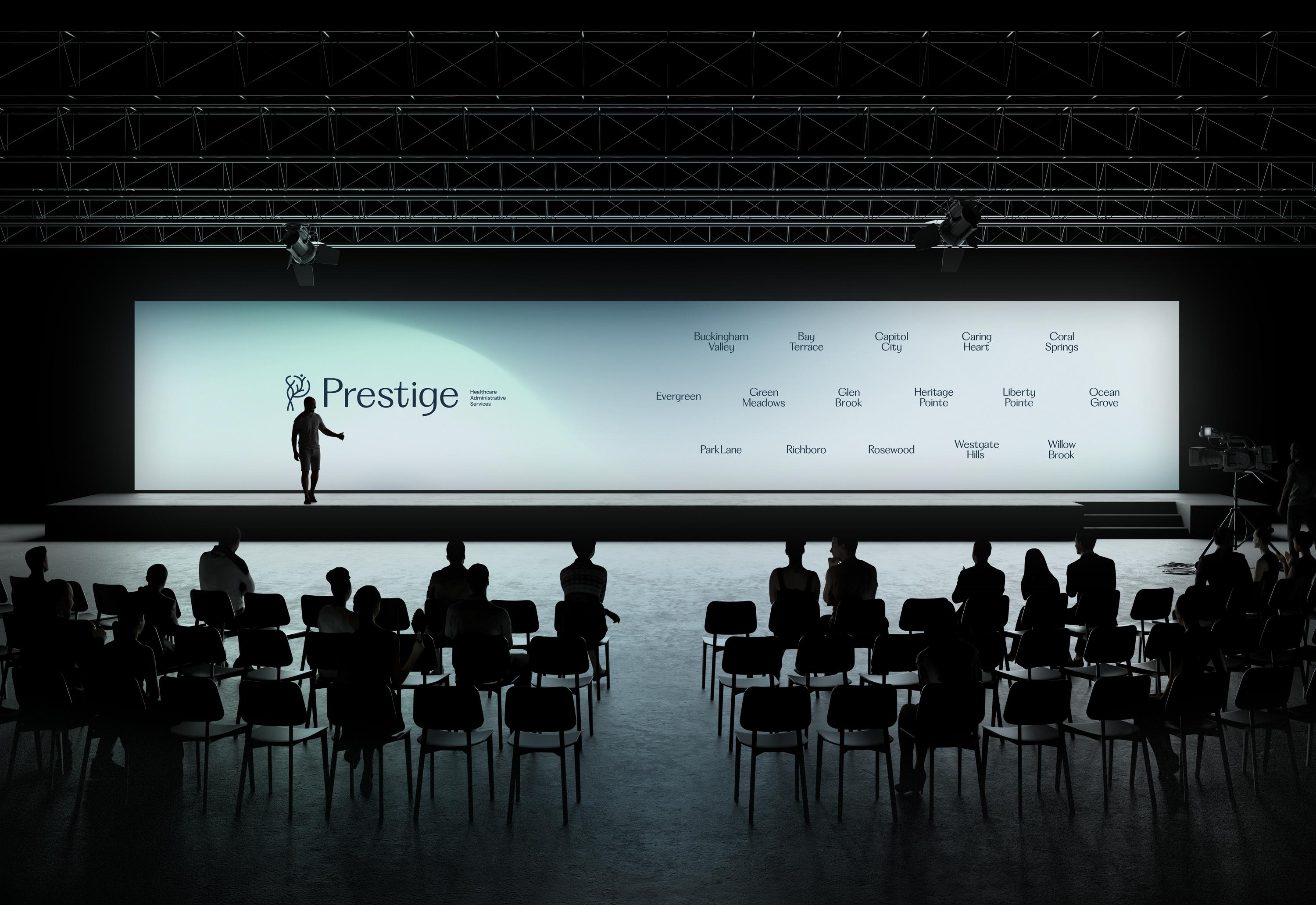
Operators ask us how to make 16 facilities feel like one brand. The answers they expect are about logos, color palettes, and templates. Those matter. They’re maybe 20% of the actual job.
Here’s what unified brand consistency at scale actually requires, in the order it matters.
The 80% nobody talks about
The visible elements of brand consistency (the logo on the wall, the typography in the brochure, the website’s color palette) are the symptoms of a unified brand. They’re not the cause.
The cause is operational. Brand consistency comes from a small number of operational systems that almost no multi-location operator has fully in place. When those systems exist, the visible consistency emerges naturally. When they don’t, no amount of guideline enforcement makes the brand actually look unified.
Here are the seven systems.
System one: a single canonical asset library
Every photo, every logo file, every template, every letterhead, every social graphic should live in one place that everyone in your operation can access.
If your facility administrator in Phoenix is making a flyer in Canva using a JPG of your logo she pulled off your website (which is the wrong file format), the brand is leaking value at that facility. Multiply that across 16 facilities and you have 16 different versions of your brand floating around, each one a small degradation.
The fix is a real asset library. Cloud-based, organized by category, versioned, with the canonical files clearly labeled. Plus a clear policy: nobody uses anything that didn’t come from the library. This single change does more for brand consistency than any guidelines document.
System two: pre-built templates for everything that gets made repeatedly
Look at what your operation produces every month. New facility flyers. Recruitment ads. Family newsletters. Birthday cards. Lobby signage. Welcome boxes. Email signatures. LinkedIn graphics. Each one is being produced over and over by different people at different facilities.
If those things aren’t templated, they’re being designed from scratch each time. Different people make different choices. The brand gets reinvented every Tuesday.
Templates eliminate that. Not generic templates (“here’s a Word doc”), but real designed templates with the brand baked in, where the user changes only the variable content. A facility administrator who needs a flyer for an open house should be filling in three fields, not designing a flyer.
The investment to build the template library is real. The compounding savings on consistency, time, and quality are larger than most operators estimate.
System three: a voice and language system that anyone can apply
Visual consistency gets most of the attention. Verbal consistency is harder and matters more. The way your operation talks (in social posts, family newsletters, recruitment ads, voicemails, signage) is more visible to your audience than your color palette.
Most operators don’t have a voice system. They have a tone document that nobody reads and a vague preference that someone in the C-suite will react to if it’s missed.
A real voice system has three components. First, a clear definition of how your brand sounds (with examples of what it sounds like and what it doesn’t). Second, a vocabulary list: the words you use, the words you don’t, the phrases that are house style, the phrases that are banned. Third, a small number of canonical example pieces (a sample family newsletter, a sample social post, a sample recruitment ad) that anyone producing copy can study before they write.
When this system is in place, the brand sounds like one operation across 16 facilities. When it isn’t, every facility’s voice depends on whoever’s writing that day.
System four: an approval workflow that doesn’t bottleneck
Most multi-location operators have a brand drift problem because the approval workflow is broken. Either nothing requires approval (in which case anyone can publish anything), or everything requires the COO’s approval (in which case work stalls and people start going around the system to ship anything).
A real workflow has tiered approval. Routine work that fits an existing template gets a fast track or self-service approval at the facility level. New work that breaks the template requires brand-team approval. New campaigns or anything customer-facing at scale requires leadership sign-off. Each tier has clear rules and clear timelines.
When this workflow exists, work moves quickly without quality drift. When it doesn’t, you’re choosing between speed and consistency, and you usually lose both.
System five: codified standards for the physical environment
Brand consistency at a multi-facility operator includes the physical environment, and the physical environment is where most operators have the largest gaps.
Lobby signage. Wayfinding. Reception desk treatment. Resident door signs. Staff name badges. Welcome materials in every facility. Print collateral at admissions. The art on the walls. The smell when you walk in. The music in the lobby.
These aren’t all branding decisions in the traditional sense. But they all contribute to whether your facilities feel like one operation. If your lobby in Cleveland has a different desk treatment than your lobby in Tucson, the brand is inconsistent in the most visible way possible, at the front door.
A real system codifies what the physical brand looks like, with photos and specs, so that when facility 17 opens, the lobby is built to standard from day one rather than improvised by whoever was on site that week.
System six: someone who actually owns brand consistency
This is the simplest and most-overlooked one. In every multi-facility operator we’ve worked with, the question “who owns brand consistency across all facilities?” had no clear answer when we walked in. The marketing director thought the agency owned it. The agency thought the marketing director owned it. Each facility administrator made local choices because no one was telling them otherwise.
When nobody owns brand consistency, brand consistency does not happen. This is structural, not effortful. You can have a perfect guidelines document and no actual ownership, and the brand will drift anyway.
Ownership has to be a named role, with authority to push back on facilities that go off-system, and with executive support behind that authority. It can be an internal director. It can be an external partner whose contract gives them the role explicitly. It cannot be “everyone, generally.”
System seven: a feedback loop that catches drift early
Even with all six previous systems in place, drift happens. A new admissions director starts at facility eight and orders new business cards from a local printer who doesn’t have the brand files. A facility administrator updates her Instagram bio with copy she wrote on her phone. A sign vendor in a new state interprets your specs slightly wrong.
The drift will happen. The question is how fast you catch it.
A real feedback loop has someone walking facilities (physically, on a rotation), reviewing every Instagram post per facility per week, auditing the website monthly, and sampling print collateral quarterly. When drift is found, it’s documented and corrected, and the system is updated to prevent the same drift from recurring.
Without this loop, drift accumulates invisibly for years until somebody realizes the brand has fragmented. Then the operator pays an agency $200K to do a “rebrand” that’s really just a re-unification of what should never have drifted in the first place.
What this actually costs
Building these seven systems is a real investment. For a 10 to 25 facility operator, the initial setup is typically a 12 to 16 week engagement involving brand strategy, asset production, template development, voice system, workflow design, and physical brand standards.
The ongoing operation of the system (the asset library maintained, templates updated, voice enforced, drift caught) is what is an embedded creative team month to month. It’s the bulk of the value, even though it’s invisible compared to a campaign launch.
The operators who get this right end up with a brand that compounds. Our work for Precision Healthcare Services and Millennial Healthcare Services shows this pattern, and the Lionstone Healthcare thirty-five-facility website rollout was an extreme case of the same logic. One canonical system applied across thirty-five buildings.
Year three feels dramatically more unified than year one, even though the visible work each month doesn’t change much. The compounding comes from the systems being in place and being maintained.
The operators who skip the systems and just keep buying campaigns end up with sixteen facilities and no unified brand, no matter how good any individual campaign was. The visible output is fine. The underlying operation is fragmented. And every new facility makes it worse.
If you’re building toward unified brand consistency, the visible work isn’t where to start. The seven systems are where to start. The visible work then becomes a function of the systems, which is what consistency actually is.
Related work
Precision Healthcare Services. Brand identity, web design, and environmental for Precision Healthcare Services.
Lionstone Healthcare. Thirty-five-facility website rollout, motion, print, and digital assets.
Millennial Healthcare Services. Brand identity, visual system, and environmental design for a four-facility skilled nursing portfolio.
One brand, every building.
Growth breaks brands. Without a system, sixteen facilities drift into sixteen looks. Brand guidelines are the rulebook that lets you scale without the brand falling apart.