High-end residential branding: how a luxury home gets sold before the buyer walks in
What luxury residential branding actually requires, why most developments leave money on the table, and a case study from a five-home Jackson, NJ development on 5+ acre lots.
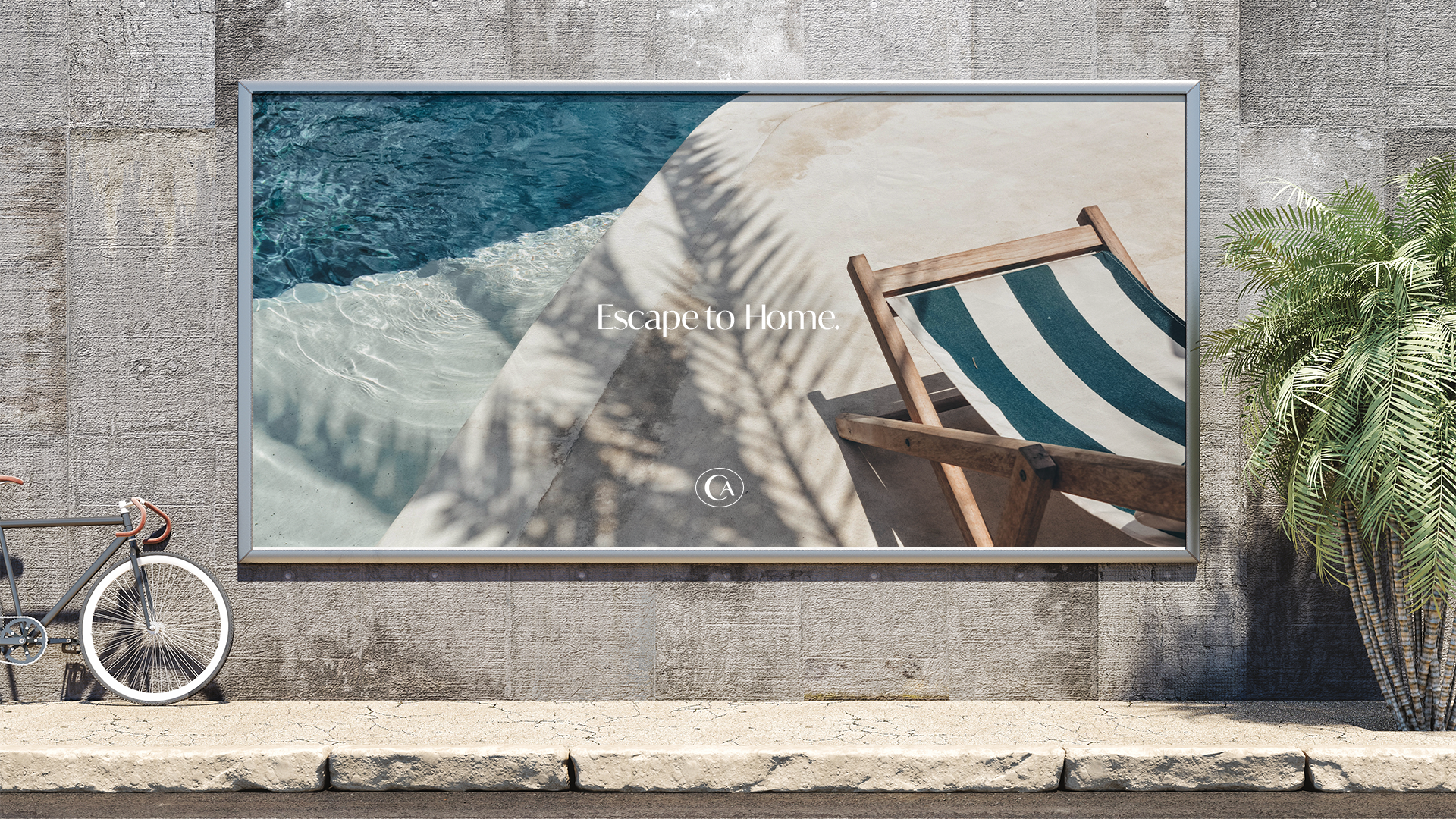
A luxury home does not sell because of square footage. It sells because the buyer arrives at the property already convinced. By the time someone walks the driveway of a five-acre estate, the brand has been doing its job for weeks. The question is whether that brand was built to do the job, or whether it was assembled at the last minute from whatever the developer’s marketing coordinator had time to put together.
This is the gap between developments that move at asking and developments that sit on market for eighteen months while the carrying cost compounds. The work happens upstream of the showing. It happens in the brochure, the billboard, the email signature, the Instagram grid, the website, the printed lookbook the family takes home. Every one of those touchpoints is either reinforcing the price or quietly negotiating it down.
This article walks through what high-end residential branding actually involves, why most developments underinvest in it, and how a recent five-home development in Jackson, NJ, designed by world-renowned HHDesigners, was branded end to end as a system.
Why luxury residential branding is structurally different
Branding a luxury home is not branding a product. The buyer is not comparing specs. They are reading every signal the property gives off and asking one question: does this feel like a place worth this much money?
That question gets answered by accumulation. A buyer sees the billboard on the highway. They search the development on their phone. They click through to the site. The site loads slowly or quickly. The hero image is a stock palm tree or a real photograph of the actual property. The typography is a free Google font or a serif drawn for the project. The buyer’s nervous system is registering all of this in seconds, and forming a verdict that no spec sheet will overturn.
This is why luxury residential branding is not about decoration. It is about removing every reason the buyer might have to doubt the price.
Three things make this category different from any other branding work.
First, the buyer pool is small and informed. A luxury development might be selling to a few hundred qualified buyers in the entire region. Those buyers have seen forty other developments. They know what good looks like. They know what cheap looks like dressed up to look expensive. The brand cannot fool them. It has to actually be premium, in every detail they touch.
Second, the price tolerance is narrow. A $4.2M home is not a $3.8M home with better marketing. The price has to be defensible the moment the buyer sees it. If the brand undersells the property, the developer loses six figures per unit. If the brand oversells the property, the buyer walks the showing disappointed and leaves. The brand has to land the price exactly.
Third, every touchpoint is the property. The signage at the entrance is the property. The brochure on the kitchen island during the showing is the property. The email signature on the broker’s outreach is the property. There is no separation between the marketing and the asset, the way there might be for a packaged consumer good. In luxury residential, the marketing is a continuation of the architecture.
What a complete luxury residential brand system actually includes
The work breaks into seven layers. Most developments invest in one or two of them and improvise the rest. The result is a brand that holds together for the photo shoot and falls apart by the third broker email.
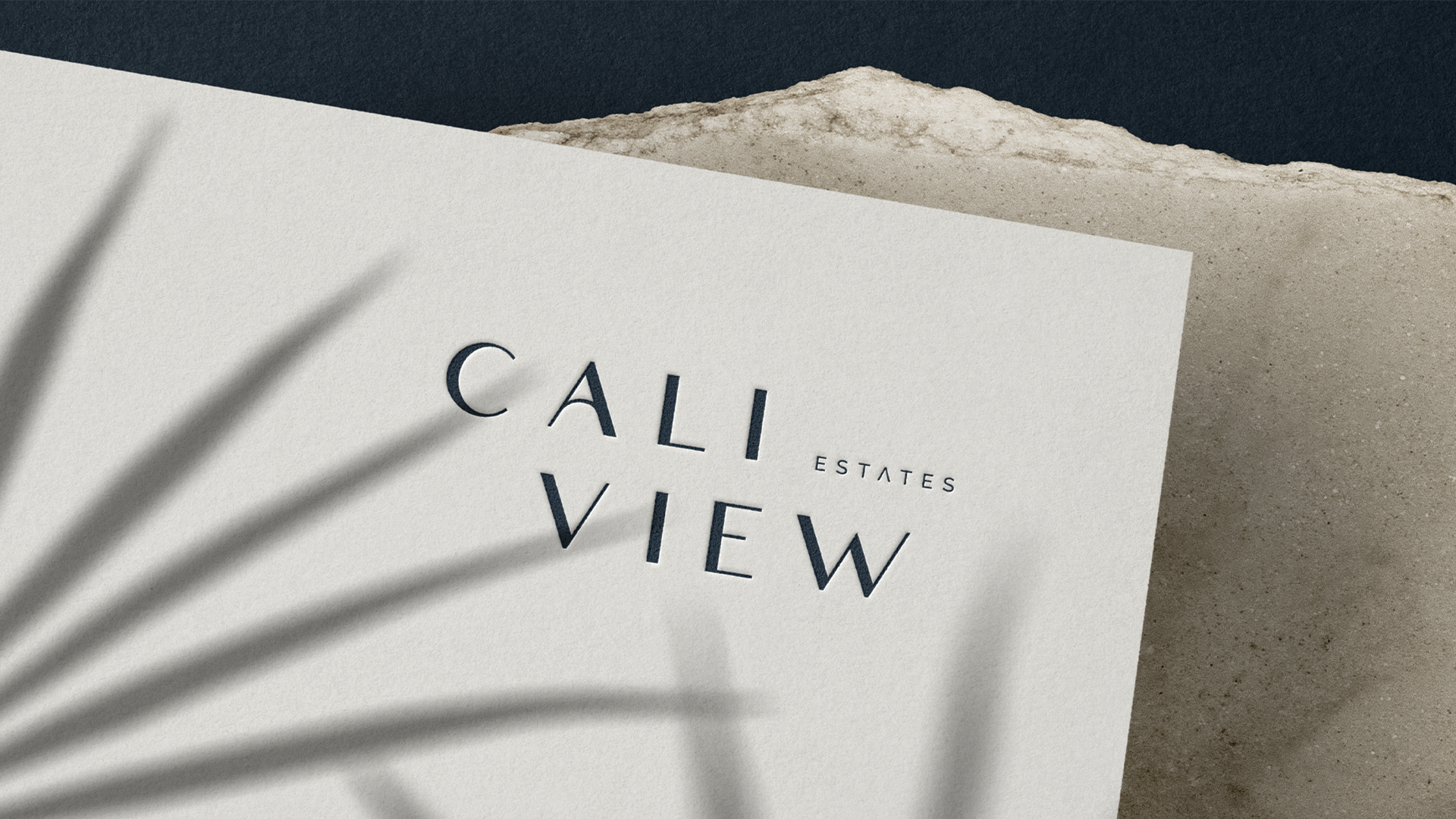
The wordmark and identity. The visible brand. The logo, the typeface, the monogram, the mark that gets embossed on the brochure cover. This is the only layer most developers fund properly, and even here, the work is often outsourced to whichever vendor delivered the construction signage. The result is a logo that looks like a logo for a strip mall.
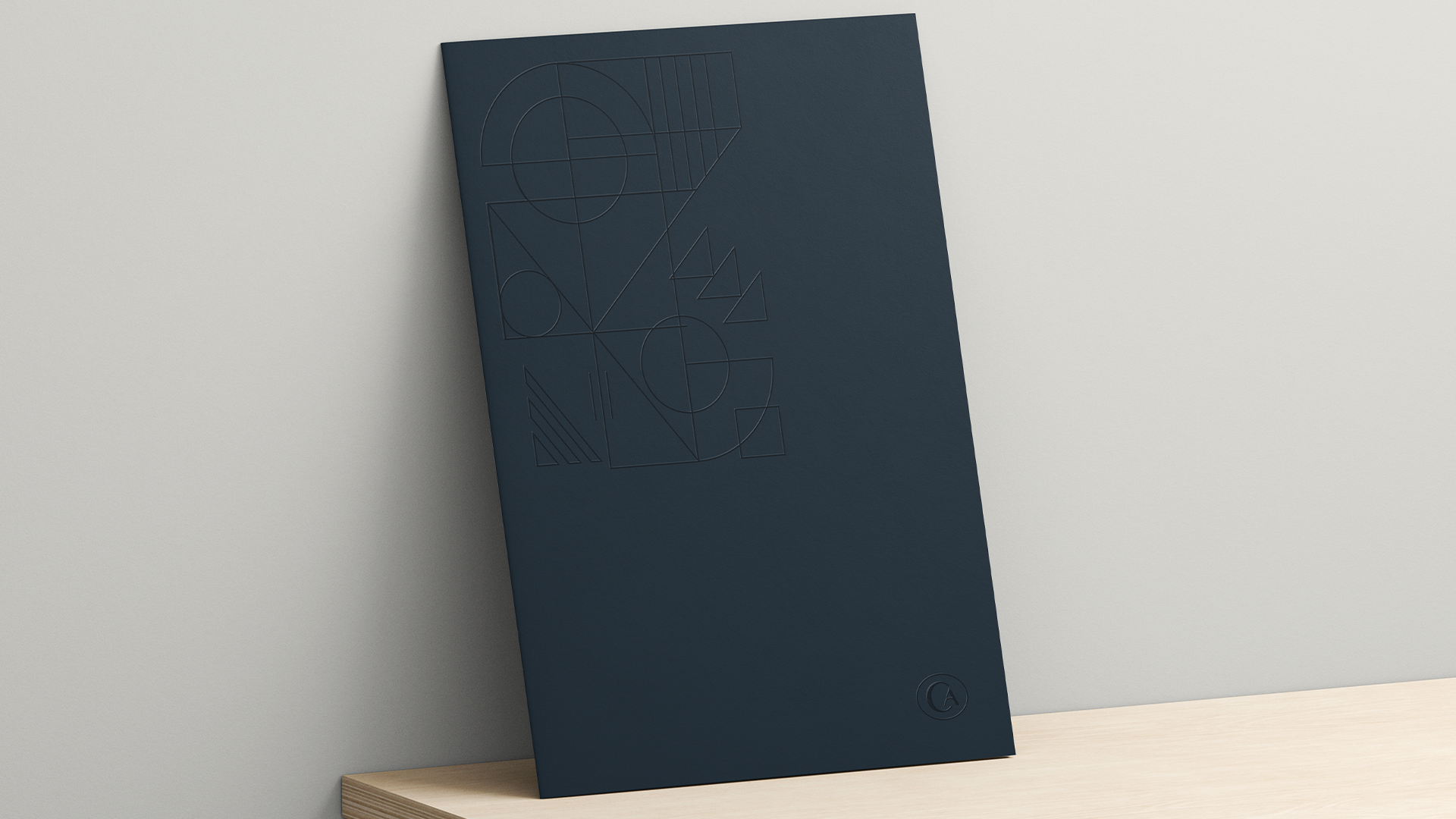
The collateral system. Business cards, brochures, lookbooks, welcome packs. The physical objects the buyer holds. A serious luxury development invests in paper stock, embossing, foiling, binding. A buyer can feel the difference between a brochure printed on 100lb cover stock with embossed monogram and one printed on whatever the broker had on hand. The hand registers the difference before the eye does.
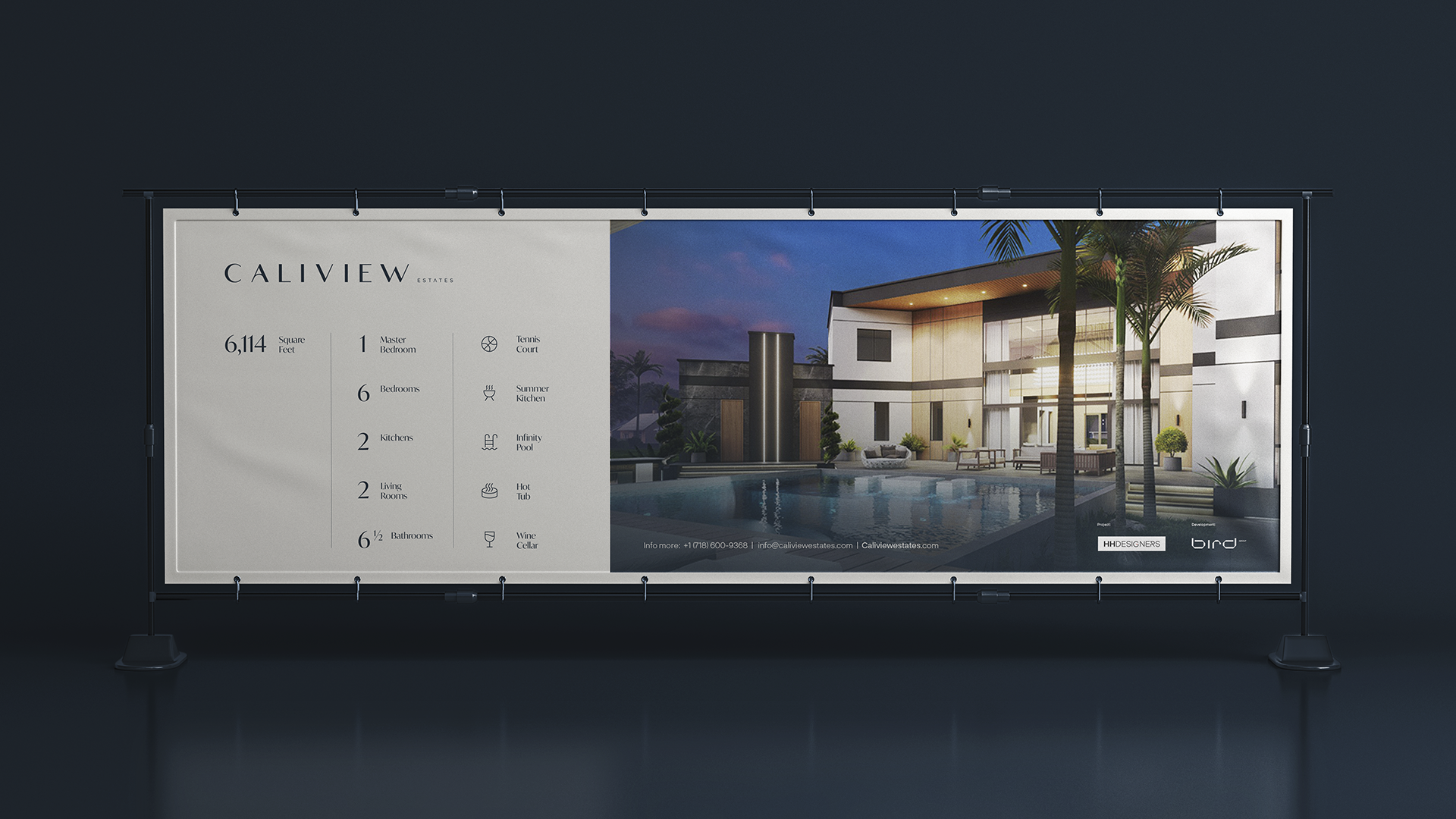
The signage and environmental graphics. Construction fence, billboards, on-site wayfinding, model home signage. The brand at scale, in context. This is where most luxury developments leak the most value, because signage is treated as a permitting problem rather than a branding problem.

The digital surface. Website, Instagram grid, broker emails, listing platforms. This is where the buyer actually lives during the consideration phase. A 2010-era property website with stock images and a contact form is how most luxury developments get filtered out before the showing. The buyer never even calls.
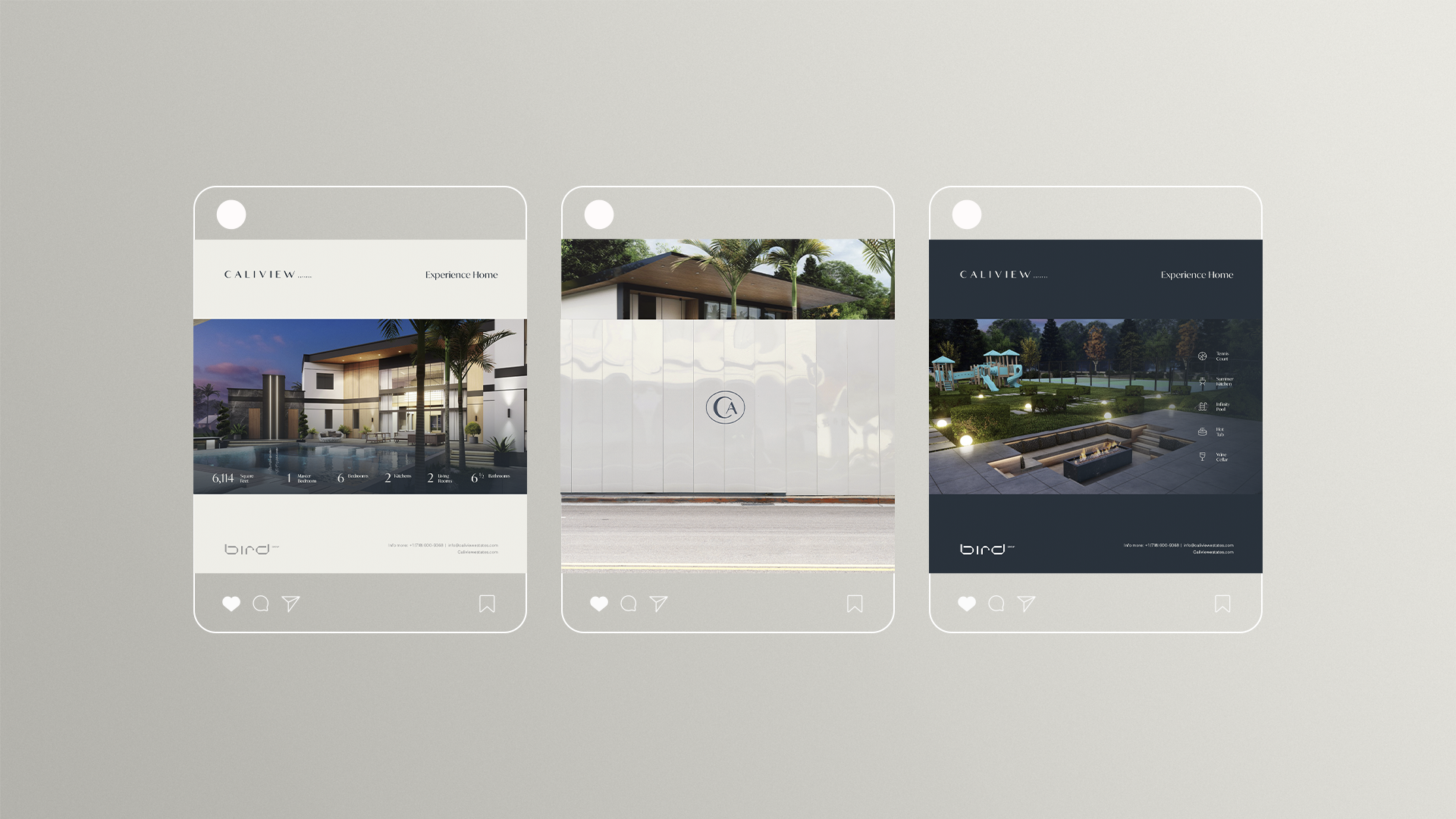
The photography and rendering direction. This is upstream of everything else. If the renders look like generic real estate marketing, no amount of typography will save the brand. The art direction of the imagery is the largest single lever in luxury residential branding, because it is what populates every other layer of the system.
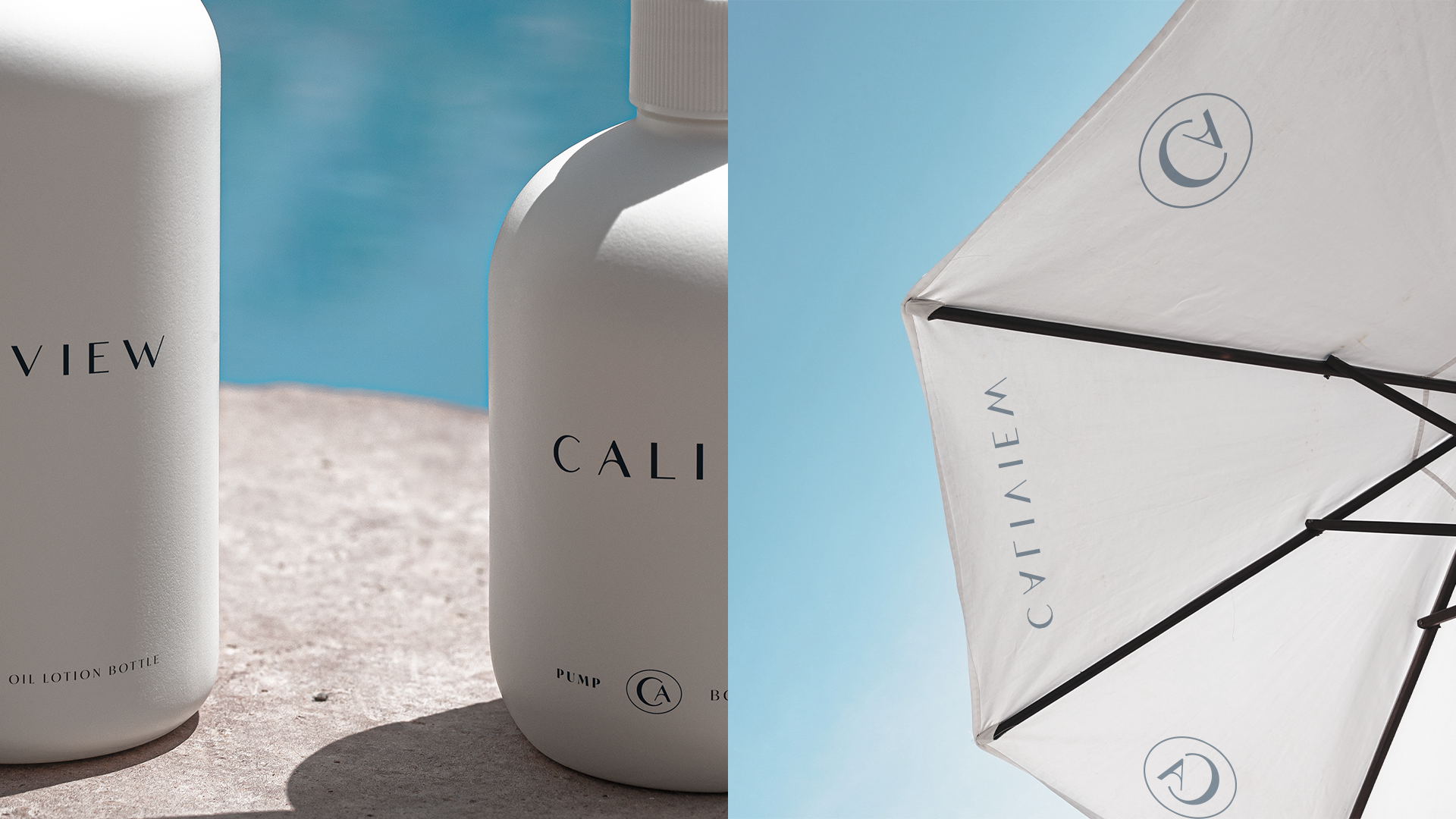
The packaging and on-site experience. Welcome boxes, branded soaps in the model home bathroom, towels, umbrellas at the pool during the showing. These are not luxuries. They are the ambient brand that surrounds the buyer during the most decision-making moments of the experience.
The pattern language and supporting graphics. The geometric pattern, the secondary marks, the textures, the editorial supporting elements that let the brand have range across formats without losing identity. This is the layer that separates a brand that looks consistent from a brand that looks alive.
A luxury development that has all seven layers handled is operating in a different market than a luxury development that has two of them handled. Same houses, same lots, same architect. Different buyer experience. Different prices.
The Caliview Estates case
Caliview Estates is a five-home luxury residential development in Jackson, NJ. Each home sits on five-plus acres. The architecture is by HHDesigners, drawing on post-minimalist California modernism.
The brief was to build an identity that could carry the weight of a multi-million-dollar home before anyone walked the property.
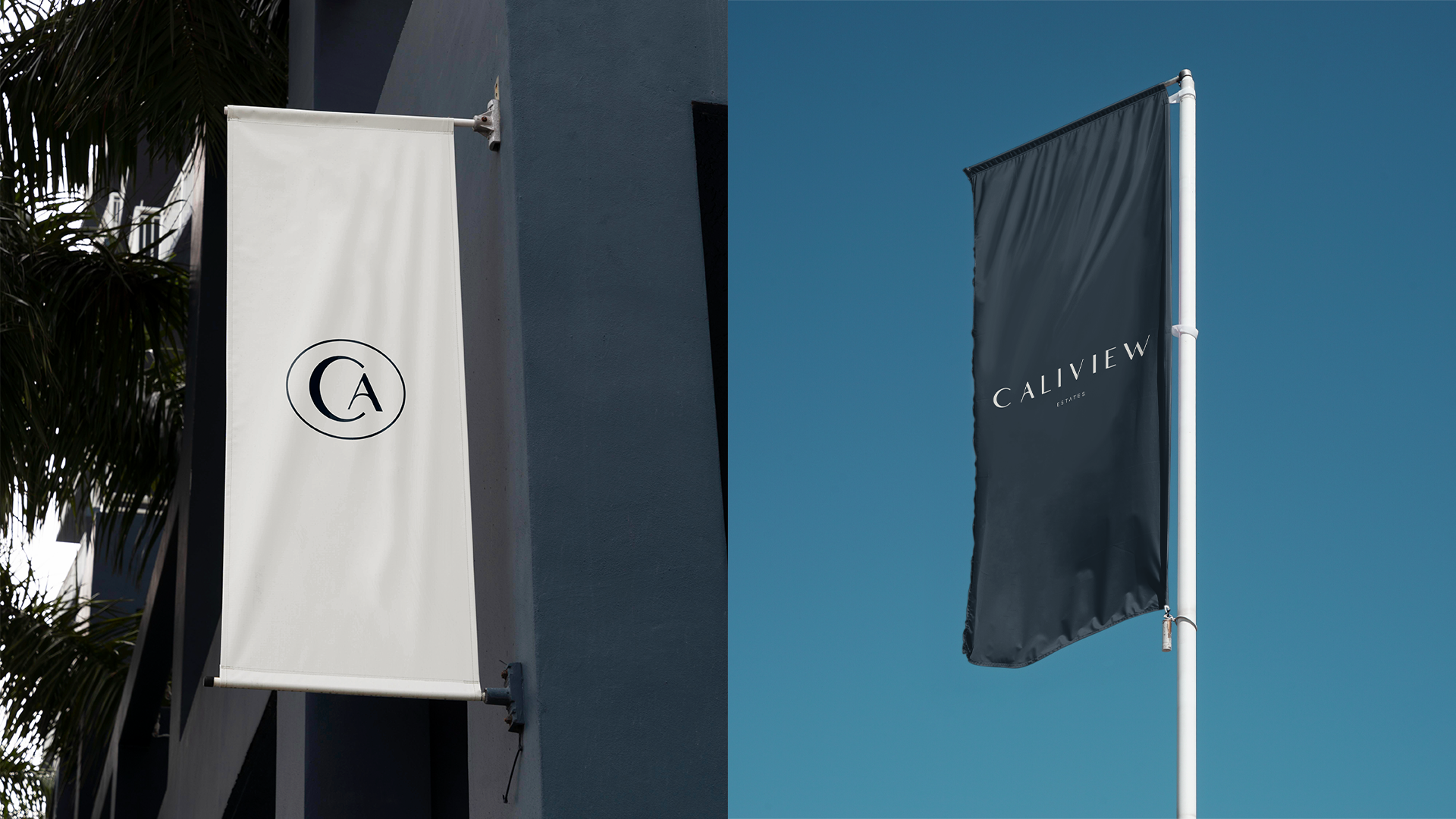
We built it around restraint. A roman-cap wordmark. A monogram that doubles as a wax seal. A palette of deep navy, stone, and paper. Embossed surfaces wherever possible, instead of printed. The visual language is quiet. It does not announce itself. It assumes the buyer is paying attention, because at this price point, they are.
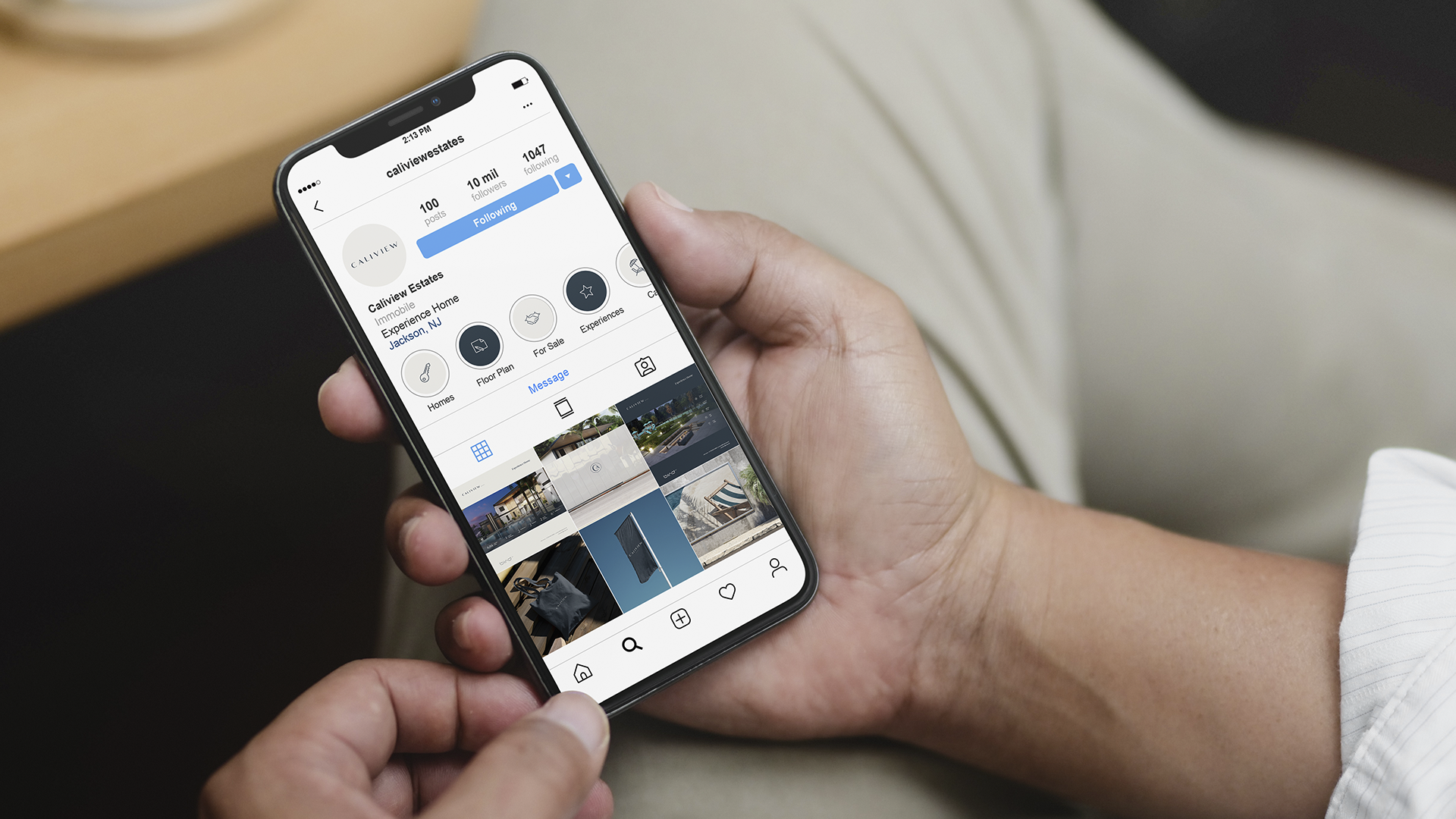
Then the system was extended across every surface a buyer would touch. The website. The brochure. The billboard at the entrance. The Instagram grid. The email signature on the broker’s outreach. The natural soap in the model home bathroom. The towels by the pool during a private showing. Every touchpoint speaks the same language.
The point of a brand at this tier is not to look expensive. It is to feel inevitable. The buyer should feel, walking the property, that the homes were always going to be sold this way. That nothing else would have made sense.
This is what luxury residential branding actually is. Not a logo on a sign at the entrance. A complete sensory environment that prepares the buyer to buy.
The architect choice is part of the brand
The best brand in the world cannot save a development with mediocre architecture. The renderings are the product, and the renderings are downstream of the architect. This is the decision most developers underweight.
A renowned architect does three things for the brand before any marketing has been written. They produce work the brand can actually sell. They give the renders authority, because a buyer who recognizes the firm or the language of the architecture brings a baseline of trust to the rest of the experience. And they create the visual material the brand inherits, which means every photograph, every render, every site plan is starting from a higher floor.
Working with HHDesigners on Caliview was a case in point. The post-minimalist California modernism the firm is known for gave us a visual language to extend into the brand. The buildings did half of the brand’s job before we drew a single mark. The wordmark, the palette, the photography direction, all of it was answering a question the architecture had already asked.
The takeaway for any developer at this tier: pick the architect like the brand depends on it, because it does. A great brand on top of mediocre architecture is a vinyl wrap on a budget car. The buyer notices.
Why most luxury developments underinvest
A few patterns we see consistently when we walk into a luxury residential project that is underperforming.
The brand was an afterthought. The developer focused on the build, hired a junior marketing coordinator three months before launch, and asked them to handle “the marketing stuff.” The result is a brand that reflects the time and budget it was given, which is to say not much.
Five vendors, five flavors. The architect designed the construction signage. A friend of the developer designed the logo. A real estate marketing firm designed the website. The broker designed the brochure. A photographer the developer met at a dinner party shot the home. Five vendors, no shared language. The buyer registers the inconsistency without being able to articulate it, and forms a quiet impression that the operation is not at the level the price suggests.
The renders are the product. A luxury development gets sold mostly off renders, because in most cases the home is not yet built. If the renders are mediocre, no other layer of the brand can recover. The art direction of the renders is the single highest-leverage decision in the whole project, and it is most often delegated to whichever 3D firm gave the lowest quote.
The website is twelve months old by launch. The website was built in late stages of construction, the developer signed off on it, and it has not been touched since. Listing photography is missing. The press section is empty. The latest blog post is from launch day. Buyers who research the property in month nine of the lease-up campaign find a development that looks like it has stalled out.
Nothing was systematized for asset two. The brand was custom-built for the first development, with no thought given to how the next one would launch. When the developer breaks ground on the next site, the entire branding effort starts from zero. The brand never compounds into the institutional reputation that the largest residential developers have built over decades.
What luxury residential branding should cost
A complete brand system for a luxury residential development sits in a wide range, depending on the scope. The cheap version is a logo and a brochure for $15K. The serious version is the full system across all seven layers, including digital, environmental, packaging, and a launch campaign, in the $50K to $150K range.
The math on that investment is straightforward. A single luxury home selling for $1M more than it would have otherwise pays for the brand fifteen times over. A development that closes six months faster than it would have otherwise pays for the brand many times over in carrying cost alone. The brand is not a cost line. It is a financial instrument that compresses the time between groundbreaking and final sale.
Most developers underspend on brand because they think of it as marketing. The largest residential developers think of it as financial engineering. They are right.
The takeaway
Luxury residential branding is not a logo. It is a system that prepares the buyer to accept the price before they ever see the home. The work happens across seven layers, from wordmark to packaging, and the developments that get all seven right operate in a different market than the developments that improvise.
If you are about to break ground on a luxury residential project and the brand is being treated as a deliverable for the marketing coordinator, you are leaving money on the table. The brand needs to be in place before the renders are commissioned, because the brand is what tells the renderer how the property should feel.
If you are building at this tier and want a brand system that earns the price, see our work for Caliview Estates or reach out.
This article is part of a series. The full picture of how brand work compounds across a major real estate development lives in our real estate development branding guide, which is the canonical resource we point developers to.